Key Takeaways
- Pennsylvania firefighters face a higher risk of asbestos exposure because the state has thousands of older homes, factories, and schools built with asbestos-containing materials. When fire destroys these structures, asbestos fibers are released into the air.
- Many firefighters remove their masks once visible flames are controlled — not realizing that odorless, invisible asbestos fibers can still linger in the air long after the smoke clears.
- Wildfires add a new dimension to the risk. Unlike a single-structure fire, wildfire smoke can travel miles — destroying older buildings in its path and spreading asbestos fibers across large areas, exposing firefighters and nearby residents.
- The health effects of asbestos exposure don’t appear immediately. Firefighters may feel healthy for years or decades before being diagnosed with mesothelioma, lung cancer, or asbestosis.
- Firefighters can reduce their risk by wearing masks longer after fires, decontaminating gear after every call, knowing which buildings in their area contain asbestos, and getting regular health screenings.
Firefighters put their lives on the line every day, but many don’t realize that the dangers continue long after the flames are out. In Pennsylvania, firefighters face a higher risk of asbestos exposure—something that can lead to serious illnesses like mesothelioma and lung cancer. And with recent wildfires adding new threats, the risk is greater than ever.
Asbestos in Older Pennsylvania Buildings
Pennsylvania is home to thousands of older homes, factories, and schools built during the peak years of asbestos use. For decades, asbestos was added to insulation, roofing, floor tiles, and fireproofing materials. When a fire breaks out in one of these older buildings, the heat and destruction can release asbestos fibers into the air.
Once airborne, these tiny fibers are nearly impossible to see. Firefighters rushing in without respiratory protection can unknowingly inhale them. This is one reason why Pennsylvania firefighters are more vulnerable compared to areas with newer construction.
Why Firefighters Don’t Always Wear Masks
In the chaos of fighting a fire, many firefighters remove their masks once the flames are controlled. They may feel it’s safe because the smoke is gone, but asbestos fibers can still linger in the air. These fibers don’t have a smell, making it easy to underestimate the danger.
This habit, while understandable, puts firefighters at greater risk of long-term exposure. Over time, repeated inhalation of asbestos increases the chances of developing mesothelioma and other asbestos-related diseases.
The Added Threat of Wildfires
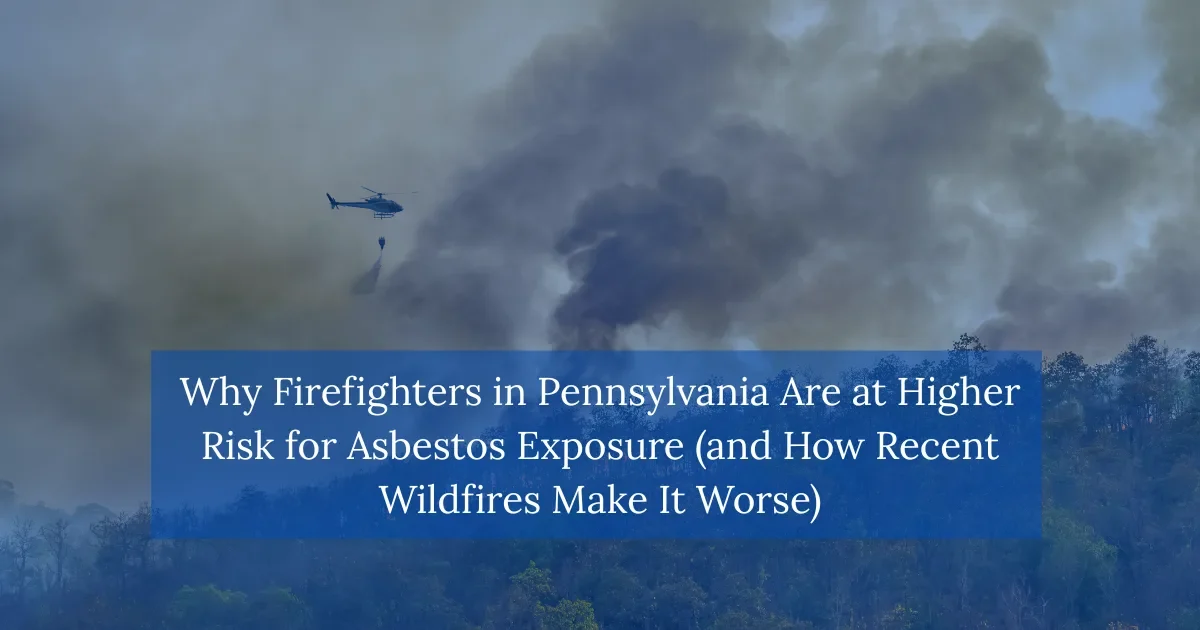
Recent wildfires across the U.S. have made this issue even more urgent. While Pennsylvania is not always thought of as “wildfire country,” it has seen its share of brush and forest fires in recent years. Wildfires can destroy older structures in their path, releasing asbestos into the air over large areas.
Unlike a house fire, where exposure is limited to one building, wildfire smoke can travel miles. Firefighters and even nearby residents may be exposed without realizing it. This means Pennsylvania firefighters responding to wildfire emergencies are facing an even more widespread risk.
Health Risks Firefighters Face
The danger of asbestos is not immediate. Firefighters may feel healthy for years after exposure, only to be diagnosed decades later with mesothelioma, asbestosis, or asbestos-related lung cancer. Because of this long delay, many firefighters never connect their job risks to their health problems.
This is why awareness is so important. Understanding the connection between firefighting, asbestos, and long-term health can help with earlier detection and better treatment outcomes.
What Firefighters Can Do
There are steps firefighters can take to protect themselves:
-
- Wear protective masks longer — even after visible smoke clears.
-
- Decontaminate gear after each fire to prevent asbestos fibers from spreading.
-
- Stay informed about older buildings in their coverage area.
-
- Get regular health screenings to catch asbestos-related illnesses early.
These precautions won’t eliminate the risk, but they can significantly reduce it.
Legal and Medical Help Is Available
For firefighters who have already been diagnosed with mesothelioma or another asbestos-related disease, help is available. Many firefighters qualify for compensation through asbestos trust funds or legal claims. These resources can help cover medical bills, lost wages, and future care.
If you or a loved one has been affected, call (800) 505-6000 or reach out through the contact form.
Sources:
Frequently Asked Questions
Why are Pennsylvania firefighters at higher risk for asbestos exposure?
Pennsylvania has thousands of older buildings — homes, factories, schools, and commercial structures — constructed during the peak years of asbestos use (1930s–1980s). Asbestos was used in insulation, roofing, floor tiles, and fireproofing materials. When a fire breaks out in one of these buildings, the heat and destruction release asbestos fibers into the air. Firefighters who enter these structures — or work the aftermath — can inhale those fibers without realizing it.
Why do firefighters remove their masks after the flames are out?
In the controlled phase after visible flames are extinguished, many firefighters remove their masks because the immediate smoke has cleared and breathing feels safe. However, asbestos fibers are invisible, odorless, and tasteless — they can remain suspended in the air long after the fire is out. This habit, while understandable in the chaos of firefighting, exposes firefighters to fibers they cannot see or smell. Over time, repeated exposure increases the risk of developing mesothelioma and other asbestos-related diseases.
How do wildfires increase asbestos exposure?
Wildfires can destroy multiple older structures across a wide area, releasing asbestos fibers into smoke that travels for miles. Unlike a single-building fire — where exposure is contained to one location — wildfire smoke can expose firefighters, first responders, and even nearby residents across a broad geography. Pennsylvania has experienced brush and forest fires in recent years, and as these fires reach areas with older buildings, the asbestos risk grows.
How long after exposure can firefighters develop mesothelioma?
Mesothelioma has a latency period of 20 to 50 years. A firefighter who was exposed to asbestos during a building fire in the 1990s or 2000s may not develop symptoms until the 2030s or 2040s. This long delay is why many firefighters never connect their illness to their occupational exposure — and why regular health screenings are so important for anyone with a history of firefighting.
How can firefighters protect themselves from asbestos?
While the risk cannot be eliminated entirely, several precautions can significantly reduce exposure:
- Wear respiratory protection longer — keep masks on even after visible smoke clears
- Decontaminate gear after every fire to prevent asbestos fibers from spreading to vehicles, stations, and homes
- Know your coverage area — identify older buildings that are likely to contain asbestos
- Get regular health screenings — proactive monitoring can catch asbestos-related illnesses early, when treatment is most effective
What compensation is available for firefighters diagnosed with mesothelioma?
Firefighters diagnosed with mesothelioma or another asbestos-related disease may qualify for compensation through several pathways:
- Asbestos trust fund claims — over $30 billion available across 60+ trust funds
- Legal claims against building owners or manufacturers of asbestos-containing materials
- Workers’ compensation — for occupational illness contracted on the job
- VA benefits — for firefighters who are also military veterans
Call (800) 505-6000 or fill out our contact form for a free consultation.
