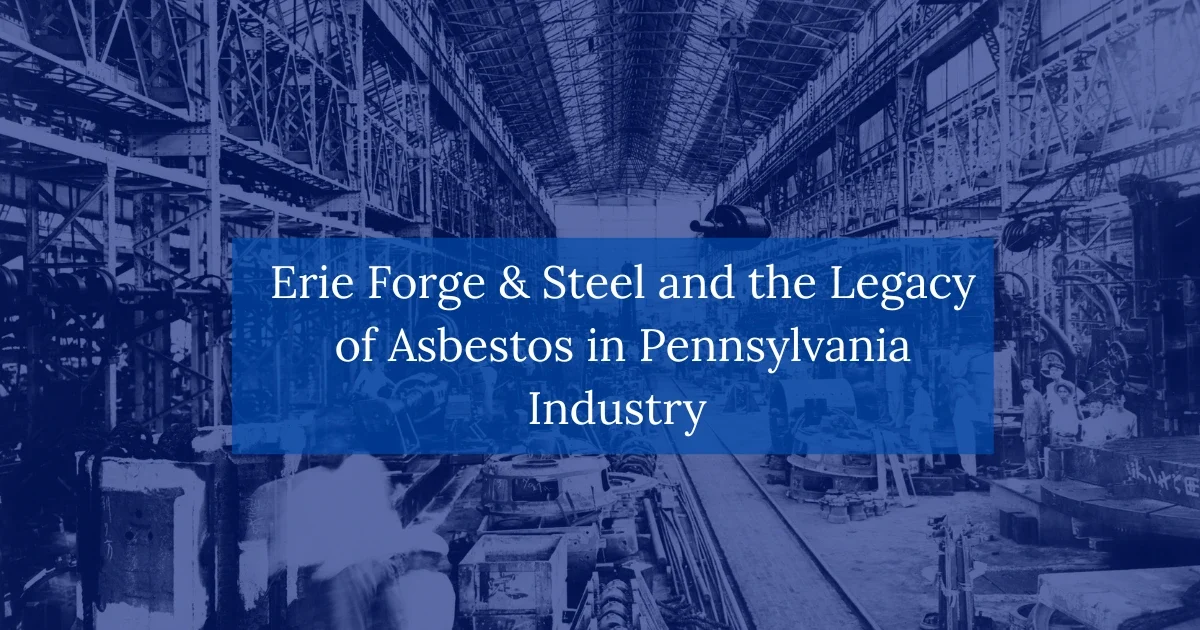
Pennsylvania’s industrial history is deeply rooted in steel production, heavy manufacturing, and shipbuilding. Among the facilities that helped shape that legacy is Erie Forge & Steel in Erie, Pennsylvania, a site connected to the broader story of asbestos use across American industry.
While these operations played a major role in economic growth and infrastructure development, they also contributed to a long-term public health challenge: widespread asbestos exposure in industrial workplaces.
Asbestos Use in Steel and Heavy Industry
During much of the 20th century, asbestos was considered a “miracle material” because of its heat resistance and durability. In facilities like Erie Forge & Steel, it was commonly used to protect equipment and workers from extreme temperatures generated during metal forging and manufacturing processes.
Asbestos-containing materials were frequently found in:
- Furnace and boiler insulation
- Pipe covering and lagging
- Protective clothing and heat shields
- Gaskets, valves, and sealing materials
- Roofing and building insulation within industrial structures
In high-heat environments like steel forging, asbestos was widely relied upon to reduce fire risk and improve operational safety. However, the dangers of asbestos exposure were not fully understood or properly communicated to workers at the time.
Worker Exposure in Industrial Settings
At facilities such as Erie Forge & Steel, exposure often occurred during routine work activities, including:
- Maintenance and repair of industrial machinery
- Cutting, grinding, or removing asbestos-insulated materials
- Cleaning or disturbing older insulation systems
- Demolition or renovation of aging plant structures
When asbestos-containing materials are disturbed, microscopic fibers can be released into the air. Once inhaled, these fibers may become permanently lodged in the lungs, leading to long-term health consequences.
Many workers were exposed without respiratory protection or awareness of the risks, especially during peak industrial production periods.
Health Risks Linked to Asbestos Exposure
Decades after exposure, individuals who worked in steel mills and related industrial environments may develop serious asbestos-related illnesses, including:
- Mesothelioma
- Asbestosis
- Lung cancer
- Pleural thickening and other respiratory diseases
One of the most concerning aspects of asbestos exposure is its latency period—symptoms may not appear for 20 to 50 years after initial contact, making early detection and historical exposure awareness critical.
The Broader Legacy of Pennsylvania Industry
Erie Forge & Steel represents just one piece of a much larger industrial landscape across Pennsylvania. Steel mills, foundries, shipyards, and manufacturing plants throughout the state relied heavily on asbestos-containing materials for decades.
While these industries fueled economic growth and national development, they also left behind a legacy of occupational health challenges that continue to affect workers and their families today.
Modern Awareness and Accountability
Today, asbestos use is heavily regulated, and workplace safety standards have significantly improved. However, the legacy of past exposure remains an ongoing concern in communities with strong industrial histories like Erie.
Ongoing efforts focus on:
- Identifying and documenting historical exposure sites
- Supporting early detection and medical research
- Holding responsible parties accountable where applicable
- Educating workers and families about potential risks
Understanding the Impact Today
The story of Erie Forge & Steel is not just historical, it reflects a broader truth about industrial progress and its long-term consequences. Many individuals affected by asbestos exposure are still being diagnosed today due to work performed decades ago.
As awareness grows, so does the importance of understanding where exposure may have occurred and ensuring that affected individuals have access to information, support, and resources.
We are committed to helping individuals and families affected by asbestos exposure understand their options and seek the support they deserve. If you or a loved one may have been exposed while working in a steel mill, manufacturing facility, shipyard, or other industrial setting, call us at 800-505-6000 or reach out through our contact form. A member of our team will assist you promptly, because awareness matters, accountability matters, and you matter.
Sources:
