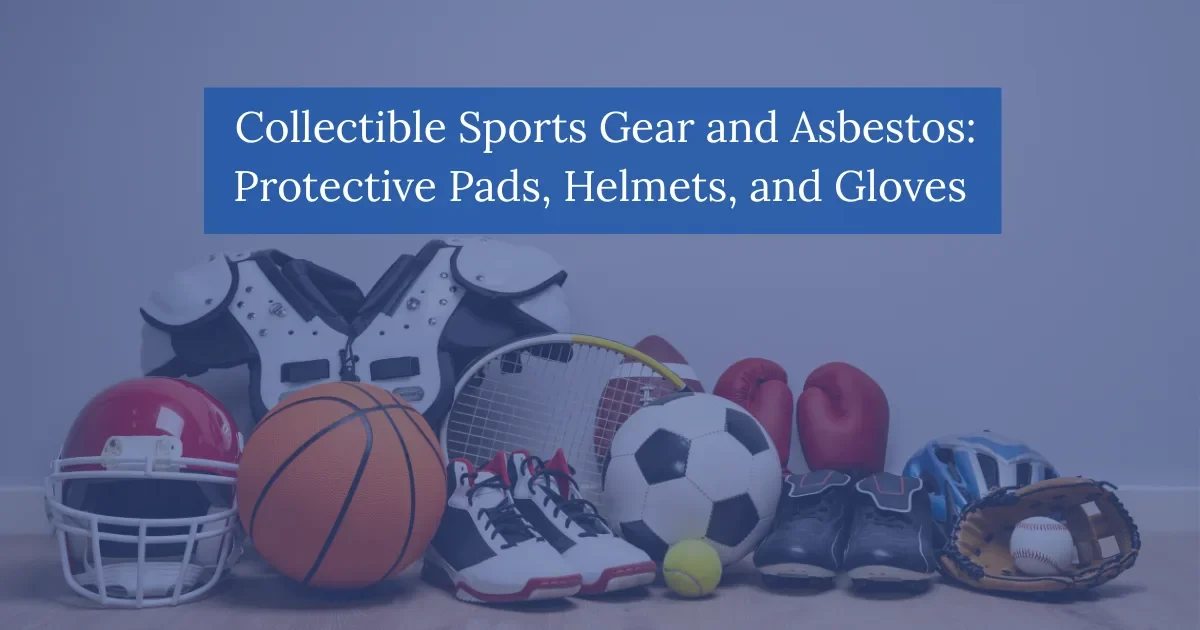
When you think of asbestos, you probably imagine industrial settings, old factories, or building materials. But some historic sports gear like helmets, pads, gloves, and protective clothing also incorporated asbestos across the 20th century. As a collector, vintage sports memorabilia may be full of surprises. Some items may contain hidden asbestos components, putting anyone who handles them at risk if they’re damaged or deteriorating.
Why Asbestos Was Used in Protective Gear
Back in the mid-1900s, asbestos was considered a “miracle fiber.” It was cheap, abundant, fire-resistant, and had good heat insulation. Manufacturers applied it to many products, including protective sports gear, for a few reasons:
- Heat and friction resistance: In gear for motorsports, auto racing, or hockey, materials that faced high heat or friction were reinforced with asbestos.
- Padding stabilization: Asbestos added structural integrity to padding, liners, and inner layers in gloves and helmets.
- Fireproofing: In some garments, gloves, or jackets used near engines or fires, asbestos helped make them flame-resistant.
Because these items were made before asbestos regulations, many collectors may unknowingly own gear that once used asbestos in its components.
Examples and Historical Evidence
Some documented cases and product recalls show how wide the use of asbestos was:
- Asbestos mitts: A scholarly article “Exposure and risks from wearing asbestos mitts” (PMC) discusses how people using such mitts could inhale low levels of asbestos fibers over time.
- Sports gear & appliances overlap: Many consumer products once contained asbestos, including sporting goods, appliances, and household items.
- Recalls in power sports: Polaris, a manufacturer of ATVs and leisure vehicles, recalled several models of youth quad bikes after discovering asbestos in brake pads, shoes, and gaskets.
These examples show that asbestos in recreational and sports equipment is not just theoretical—it has real precedents.
When the Risk Becomes Real
Owning vintage gear doesn’t automatically mean danger—but certain conditions raise red flags:
- Deterioration: Crumbling, flaking, or broken padding, perforated liners, or brittle surfaces are high-risk signs.
- Handling or restoration: Sanding, drilling, or reshaping old gear could release dust and fibers.
- Storage conditions: Items exposed to moisture or heat may degrade faster, turning sealed materials into friable (easily broken) ones.
- Repeated handling: Constant use, cleaning, or display handling can wear down materials over time.
When these conditions exist, asbestos fibers may become airborne and inhaled.
How to Stay Safe as a Collector
If you collect or handle vintage sports gear, here are precautions:
- Avoid DIY restoration
Don’t cut, sand, or polish old gloves, pads, or helmets that might contain asbestos.
- Store collectibles safely
Use airtight containers or sealed display cases to reduce fiber migration.
- Use protective gear when needed
Wear respirators (P100 or N100), gloves, and coveralls when you must inspect or move old items.
- Test before restoring or displaying
If you suspect asbestos, hire a certified lab or inspector to test small samples under safe conditions.
- Document provenance and condition
Keep records of when and where you got the item, its condition, and any testing done—helpful for health and authenticity.
Why This Matters in Pennsylvania
Pennsylvania has a rich sports culture, vintage gear from local high school teams, old university athletic departments, or regional sports memorabilia may be stored in basements and attics. Some of these items were manufactured decades ago, during the period when asbestos use was common.
Collectors, sellers, or even family members might not be aware of the hidden risks. If old gloves, pads, or helmets have been passed down, they may be part of that hidden legacy.
The Bottom Line
Vintage sports gear can bring joy, nostalgia, and value, but it can also carry a hidden danger. Asbestos components in old pads, helmets, gloves, or protective garments, if damaged, may release harmful fibers. Taking preventive steps, testing when uncertain, and handling risky items with care are key.
If you ever suspect an item contains asbestos or have experienced health symptoms, reach out to certified experts who understand these risks. Staying informed is one of the best ways to protect your passion and your health. For more information, call (800) 505-6000, fill out our contact form, or chat with a representative on our website.
