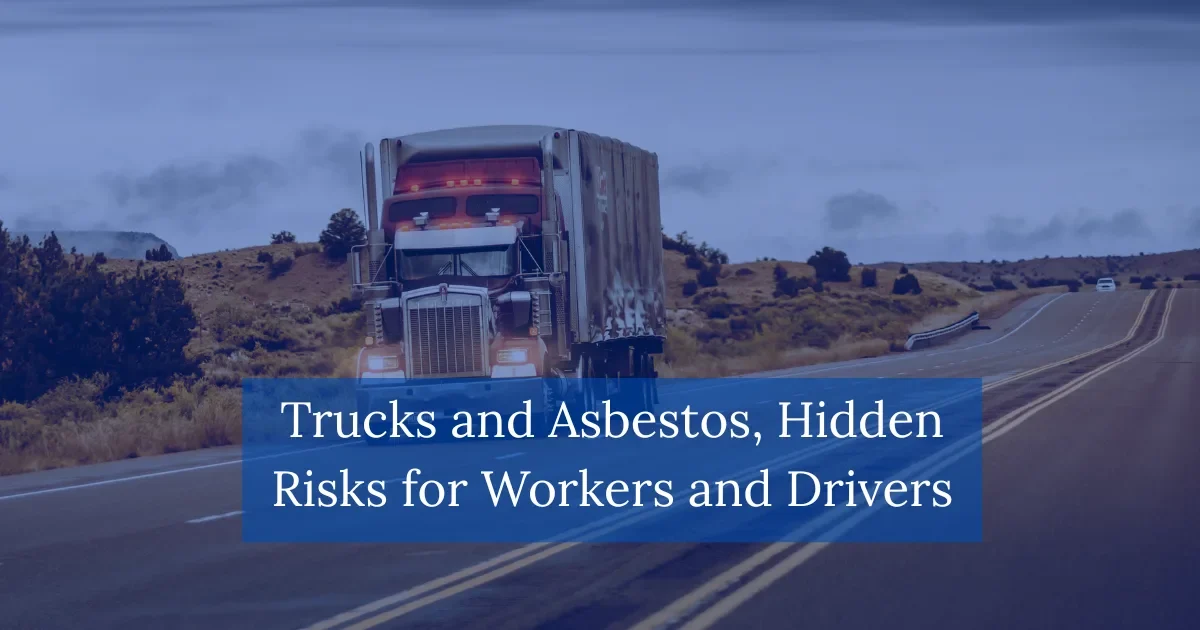
Trucks keep the world moving. They deliver food to grocery stores, supplies to factories, and products to homes. Behind every delivery are hardworking mechanics and drivers who dedicate their lives to keeping trucks on the road. But for decades, many of these workers were exposed to asbestos, a dangerous mineral linked to mesothelioma, lung cancer, and asbestosis. What was once thought of as a “miracle material” turned out to be deadly.
Working on Trucks, Exposure in the Garage
Truck mechanics were among the most at-risk for asbestos exposure. For much of the 20th century, asbestos was built into key truck parts because it was cheap, durable, and heat-resistant. Unfortunately, this meant that every repair carried a hidden danger.
Mechanics often handled:
- Brakes and brake linings: Grinding, sanding, or replacing brakes released clouds of asbestos dust into the air. Many mechanics even used air hoses to blow out brake dust, unknowingly spreading fibers across the shop.
- Clutches and clutch facings: These wore down with use and were replaced often, exposing workers to fibers during removal and installation.
- Gaskets and seals: Asbestos was used to withstand heat and pressure in engines, and removing old gaskets caused them to crumble into dust.
- Insulation and heat shields: Asbestos materials were built into engines and exhaust systems to prevent overheating, exposing mechanics when these parts were cut, drilled, or replaced.
Even short-term exposure could be harmful. Since asbestos fibers are microscopic and can remain in the air for hours, mechanics often breathed them in during routine work, without realizing the risks.
Drivers encountered asbestos through:
- Cab insulation and floorboards, which contained asbestos for soundproofing and fire resistance. Over time, these materials wore down and released fibers into the cab.
- Braking systems, which released asbestos dust during heavy use, especially on mountain roads or long-distance hauls. Drivers often inhaled this dust without any protection.
- Secondary exposure, which happened when drivers carried asbestos dust home on their clothing, exposing family members to danger.
For many truck drivers, exposure was ongoing and unavoidable, making them vulnerable to diseases that may not show up until decades later.
Why Asbestos Was Used in Trucks
Asbestos was favored by manufacturers because it was affordable and could withstand high heat and friction. Trucks, which generate intense heat in brakes, clutches, and engines, seemed like the perfect machines for asbestos parts.
Unfortunately, companies continued using asbestos long after they knew it was harmful. By the 1930s, medical studies were already linking asbestos exposure to deadly lung diseases. Despite this knowledge, asbestos parts were used in trucks well into the 1980s, putting generations of workers and drivers at risk.
The Human Cost of Asbestos Exposure
The impact of asbestos exposure in the trucking industry is still being felt today. Many mechanics and drivers from the 1950s through the 1980s are now developing mesothelioma and other asbestos-related diseases. These illnesses take 20 to 50 years to appear, meaning the consequences of past exposure are surfacing decades later.
Families have also been affected. Wives and children who washed dusty work clothes or hugged their loved ones after a shift unknowingly inhaled fibers too. This kind of secondary exposure has led to devastating illnesses in people who never worked directly with asbestos.
Get Legal Help Today
If you or someone you love worked on or drove trucks and has been diagnosed with mesothelioma or another asbestos-related disease, you may have the right to compensation. Our team knows how to investigate exposure, trace it back to specific truck parts and manufacturers, and build strong cases to hold negligent companies accountable. Call us at (800) 505-6000, fill out our contact form, or chat with us on our website for a free consultation
Sources:
